


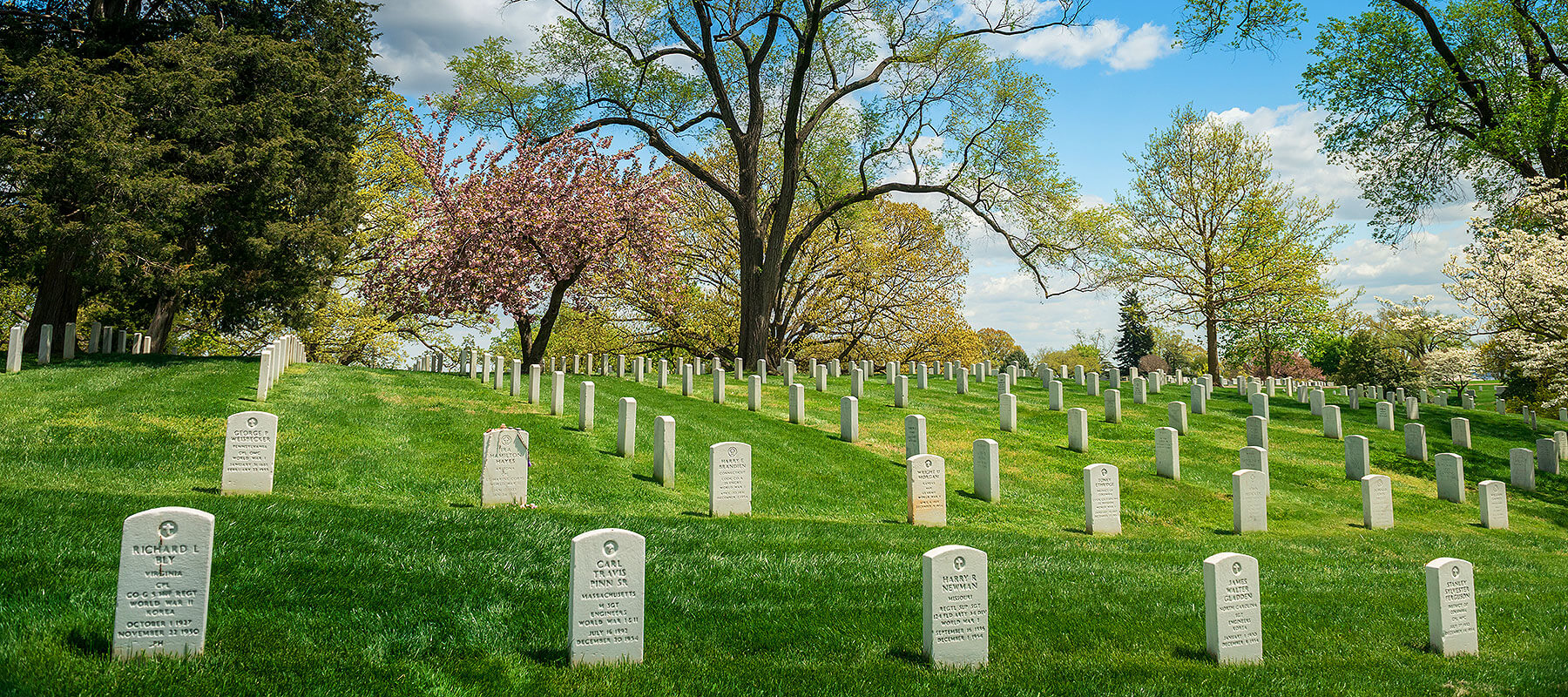
The Best Way to See Historic Cemeteries in Washington D.C.
The best way to explore historic cemeteries across Washington D.C. is by combining Old Town Trolley Tours with Arlington National Cemetery Tours. While Old Town Trolley provides easy citywide transit to reach historic sites and neighborhoods across D.C., Arlington National Cemetery Tours offers the official guided loop inside America’s final resting place for more than 400,000 active duty service members, veterans, and their families. Pairing both gives you a seamless, comfortable way to experience these iconic national landmarks without transit stress or grueling walks.
Why You Should Include Arlington National Cemetery Tours on Your Trip
- Official In-Cemetery Tour Service: Experience the only authorized guided tour operating directly inside Arlington National Cemetery across its 639 sacred acres.
- Avoid Demanding Walks: Save your energy and navigate rolling, steep hills comfortably aboard continuous tour vehicles.
- Live Guided Historical Context: Listen to expert local guides share compelling stories of military leaders, heroic sacrifice, and national icons.
- Hop-On, Hop-Off Access: Disembark at key stops—including the Tomb of the Unknown Soldier, Arlington House, and the John F. Kennedy Gravesite—to explore memorials at your own pace.
- Seamless Connection to D.C. Sights: Effortlessly link your cemetery tour with Old Town Trolley’s citywide stops across the Potomac River to explore D.C.’s other historic cemeteries and monuments.
Key Features of Historic Cemeteries in Washington D.C.
- Arlington National Cemetery: Visit the Tomb of the Unknown Soldier and the gravesite of President John F. Kennedy on a guided tour.
- Congressional Cemetery: Established in 1807, this site contains the graves of FBI Director J. Edgar Hoover, composer John Philip Sousa, and the Public Vault that held Dolley Madison and several U.S. presidents.
- Oak Hill Cemetery: Tour 22 acres featuring a Gothic-style chapel designed by James Renwick and the grave of former Washington Post publisher Katharine Graham.
- Rock Creek Cemetery: View mausoleums, memorials, and Augustus Saint-Gaudens’ famous hooded statue, alongside the graves of Upton Sinclair and Tim Russert.
- Washington National Cathedral: See the final resting place of President Woodrow Wilson, Admiral George Dewey, Helen Keller, and Anne Sullivan inside this cathedral.
Historic Cemeteries Around DC
Along with monuments and memorials, the Washington, D.C. capital region is also the setting for the gravesites of many famous and influential Americans. The city’s historic cemeteries help track the lives of political, military and cultural icons from former presidents and war heroes to literary giants and infamous conspirators. The following is a short list of some of the most fascinating cemeteries found around DC.
Arlington National Cemetery
 One of the most popular things to do near DC is to visit Arlington National Cemetery, the setting for the Tomb of the Unknowns and the gravesite of President John F. Kennedy. A guided tour provides insight into the history of the cemetery along with information about the famous individuals buried here and the various memorials that adorn the landscape. Located at the western terminus of Memorial Drive, the Arlington Cemetery stop is accessible on the Metro Blue line. Points of interest nearby include the Netherlands Carillon, the Iwo Jima Memorial and the Hemicycle, which houses the Women in Military Service for America Memorial. Check out this interactive Arlington map to learn more about the cemetery and its most-visited locations.
Congressional Cemetery
Established in 1807, it is one of the oldest cemeteries in the city. It is the final resting place of former FBI director J. Edgar Hoover and famous composer John Philip Sousa. The grounds are the setting for the Public Vault, a structure where bodies are held until burial. It has held the remains of Dolley Madison as well as Presidents John Quincy Adams, Zachary Taylor and William Henry Harrison. Situated on the Anacostia River in Southeastern D.C., the cemetery is accessible using the Potomac Avenue Metro stop on the Blue, Orange and Silver lines. Popular attractions nearby include the D.C. Armory, a 10,000-seat multipurpose indoor arena, and RFK Stadium, home of the D.C. United soccer team.
Mount Olivet Cemetery
The cemetery is known for its vast collection of beautiful memorials and sculptures. Along with the grave of James Hoban, the original White House architect, the cemetery contains the remains of Henry Wirz, the Confederate officer in charge of Andersonville prison. A co-conspirator in the assassination of Abraham Lincoln, Mary Surratt, the first woman executed by the federal government, is also interred at the graveyard. Benning Road & 15th Street, Northeast on the Red line is the nearest light rail stop. The entrance to the National Arboretum is nearby.
Oak Hill Cemetery
Featuring a large botanical garden, the 22-acre cemetery is centered on a Gothic-style chapel constructed in 1850. The historic chapel is the work of James Renwick who also designed the Smithsonian Castle. The bucolic setting contains the grave of former Washington Post publisher Katherine Graham. Several stops along various D line surface bus routes are approximately a block away. The Dumbarton Oaks, Dumbarton House and Tudor Place museums are nearby.
Rock Creek Cemetery
Dating from 1719, the cemetery contains the graves of Teddy Roosevelt’s daughter Alice and Charles Corby, who created Wonder Bread. Noted for its memorials and mausoleums, it is home to one of the most famous works in the city, a statue of a grieving hooded figure designed by Augustus Saint-Gaudens. The cemetery also holds the graves of Upton Sinclair and Tim Russert. Use the Fort Totten Station on the Red, Green and Yellow lines to reach the cemetery. Rock Creek is adjacent to the Soldier’s Home Cemetery, which contains the graves of 21 Medal of Honor recipients. President Lincoln’s Summer Cottage, where he drafted the Emancipation Proclamation, is close by.
Woodlawn Cemetery
This historical African-American cemetery contains the grave of Blanche Bruce. Born into slavery in 1841, he was the first black person to serve a full term in the U.S. Senate. Established in 1895, it is the successor to a number of other segregated cemeteries in the city. Other famous African-Americans interred here include John Mercer Langston, first Dean of Howard University School of Law and renowned abolitionist Wilson Bruce Evans. The closest Metro stop is Benning Road on the Blue and Silver lines. Fort Circle Park with wooded hiking trails is nearby.
National Cathedral
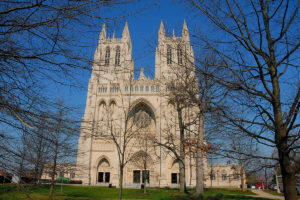 Visiting the National Cathedral is included on most lists of things to do near DC. In addition to its stunning architecture, the cathedral contains the graves of Woodrow Wilson, the only president buried inside the city limits and Admiral George Dewey as well as those of Helen Keller and her tutor Anne Sullivan. The National Zoo-Woodley Park, approximately a mile away, is the Metro stop closest to the cathedral. Attractions near the Cathedral include Embassy Row, the U.S. Naval Observatory and the National Zoo.
The District is an inimitable place full of history, patriotism and public service. Many individuals who made a mark in the culture of the nation are buried in historic cemeteries around DC. The gravestones, memorials and solemn settings tell their stories and ensure that their place in history is not forgotten.